Description
Fiocco Di Prosciutto Crudo: Tradition from Parma and Piacenza
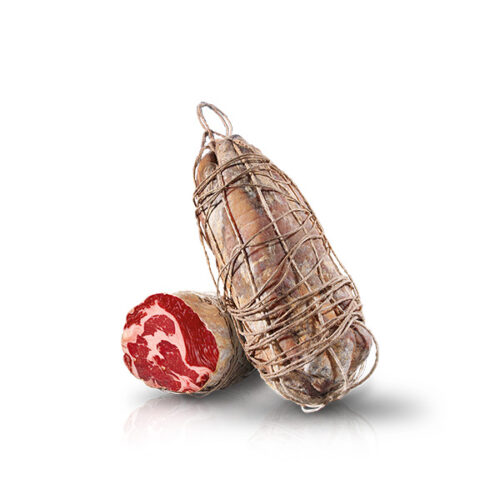
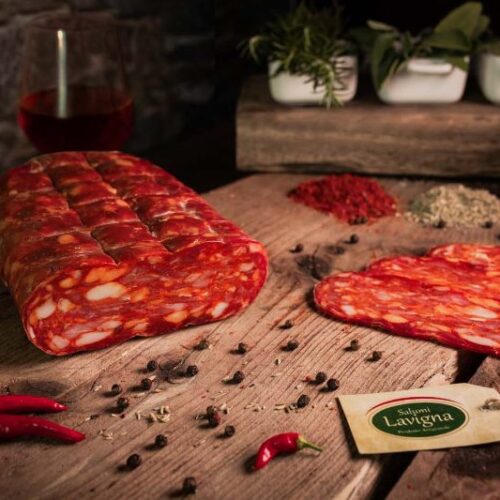
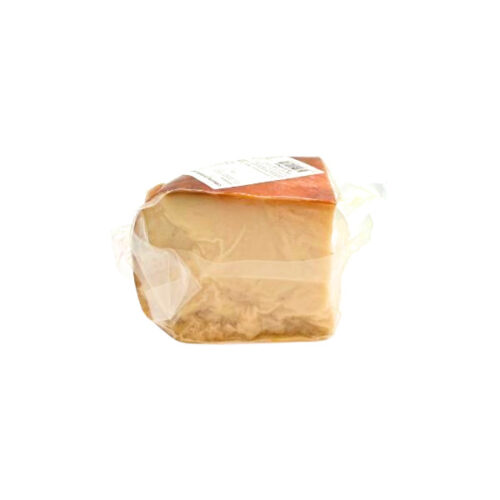
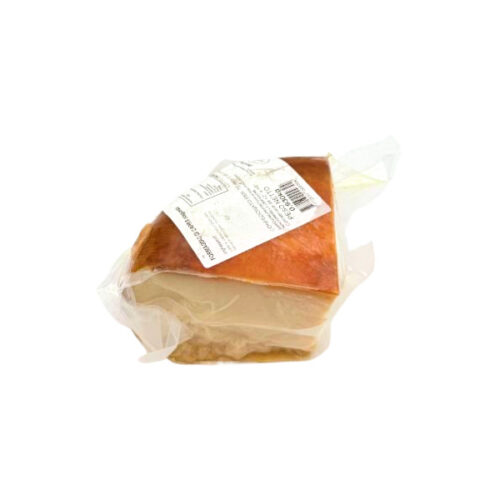
The Fiocco di Prosciutto Crudo represents one of the hidden gems of Emilian charcuterie, a refined product that embodies the artisanal wisdom of the lower Parma and Piacenza areas. Made from the noblest and leanest part of the pork leg, this cured meat with its characteristic “teardrop” shape offers a premium and healthy alternative to traditional ham, while maintaining the centuries-old tradition of pork processing.
Distinctive Features
The Fiocco di Prosciutto Crudo stands out for its unique rounded shape and compact size (10-15 cm in diameter and 15-20 cm in length), making it easily recognizable and manageable. Its uniqueness lies in its anatomical origin: it comes from the “smaller nut next to the femur” of the hind leg, the leanest and most prized part of the entire ham.
- Shape: Characteristic “teardrop” after professional trimming
- Appearance: Intense red color with minimal fat marbling
- Consistency: Compact and dry, never oily
- Flavor: Sweet and delicate, more refined than raw ham
- Texture: Soft on the palate due to short aging
Territorial Origin and Tradition
Western Emilia – Heart of Charcuterie: The lower Parma and Piacenza areas offer ideal climatic conditions for curing meats. The controlled humidity of the Po Valley, combined with the Apennine breezes, creates the perfect microclimate for the natural maturation of this excellent product.
Artisanal Tradition:
- Processing technique handed down through generations
- Valorization of the noble parts of the pig
- Respect for natural aging times
- Manual selection of the best pork legs
Artisanal Production Process
Traditional Processing Phases:
- Raw Material Selection: Fresh legs from top-quality heavy national pigs
- Specialized Deboning: Surgical bone extraction while keeping the “nut” intact
- Expert Trimming: Careful removal of excess fat to obtain the teardrop shape
- Brief Salting: 2 weeks with coarse sea salt (vs. months for ham)
- Accelerated Aging: 3 months in controlled natural air
- Quality Control: Constant verification of optimal maturation
Fiocco vs. Raw Ham: The Substantial Differences
| Characteristic | Fiocco di Prosciutto | Raw Ham |
|---|---|---|
| Anatomical origin | Smaller nut (boneless) | Entire leg (with bone) |
| Shape | Rounded “teardrop” | Classic leg shape |
| Dimensions | 10-15×15-20 cm | 60-80×25-30 cm |
| Aging | 3 months | 12-24 months |
| Salting | 2 weeks | Months |
| Fat content | Very lean (4-8g/100g) | More fat (12-18g/100g) |
| Calories per 100g | 150-180 kcal | 235 kcal |
| Flavor | Sweet and delicate | More savory and structured |
Nutritional Values per 100g
- Energy: 165 kcal / 690 kJ
- Proteins: 29g (very high protein content)
- Total fats: 6g (ultra-lean)
- of which saturated: 2.2g
- of which monounsaturated: 2.8g
- Carbohydrates: 0.5g
- Sodium: 1200mg
- Iron: 2.5mg
- Potassium: 320mg
Ideal for low-calorie and high-protein diets, comparable to bresaola in leanness
Optimal Storage
Whole Fiocco:
- Cool and dry environment (59-64°F)
- Relative humidity 70-75%
- Hung position for natural aeration
- Duration: 2-3 months from production
Opened Fiocco:
- Refrigerator temperature 34-45°F
- Cover the cut part with plastic wrap
- Wrap in a clean kitchen cloth
- Duration: 1 month after opening
Storage Tips:
- Avoid direct heat sources
- Protect from sunlight
- Check for absence of condensation
- Consume from the outer parts towards the center
Professional Cutting Technique
Optimal Preparation:
- Remove from fridge 30 minutes before consumption
- Clean the surface with a dry cloth
- Position with the fat side up
Cutting Methods:
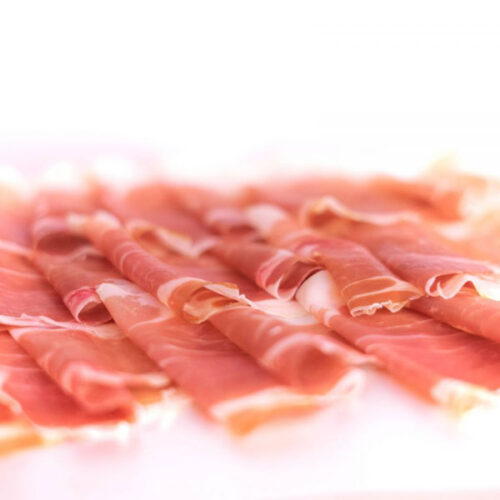
- With Slicer: Set to 1-2mm for perfect slices
- Manual Cutting: Well-sharpened knife, clean movements
- Direction: Perpendicular to muscle fibers
- Thickness: Thin slices to enhance delicacy
Gourmet Culinary Uses
Direct Consumption:
- Elegant Appetizers: Served with crostini and mustard
- Refined Charcuterie Boards: Paired with fresh cheeses
- Gourmet Aperitifs: With sparkling wine and finger food
Elaborate Preparations:
- Fiocco Carpaccio: With arugula, Parmesan, and extra virgin olive oil
- Spring Rolls: Stuffed with grilled vegetables
- Protein Salads: Base for fitness salads
- Gourmet Sandwiches: With focaccia and fresh vegetables
Light First Courses:
- Summer Cold Pasta: With cherry tomatoes and basil
- Delicate Risotto: Creamed at the end of cooking
- Gnocchi with Butter: With fiocco and Parmesan
Refined Food and Wine Pairings
Complementary Cheeses:
- Robiola di Roccaverano: Creaminess that enhances leanness
- Crescenza Lombarda: Balancing sweetness
- Fresh Ricotta: Lightness for healthy pairings
- Aged Montasio: Structure that complements the flavor
- Sweet Provolone: Authentic Emilian tradition
Wine Pairings:
- Dry Whites: Trebbiano d’Emilia, Ortrugo dei Colli Piacentini
- Light Reds: Sparkling Bonarda, young Barbera d’Asti
- Sparkling Wines: Lambrusco di Sorbara, Franciacorta Brut
- Rosé: Chiaretto del Garda for summer aperitifs
Seasonal Pairings:
- Summer: White melon, fresh figs, peaches
- Autumn: Williams pears, strawberry grapes, chestnuts
- Winter: Mostarda di Cremona, acacia honey
- Spring: Artichokes, arugula, baby spinach
Nutritional and Health Benefits
Excellent Nutritional Profile:
- High protein content (29g/100g): ideal for athletes
- Low fat content (6g/100g): suitable for diets
- Rich in iron: support for anemic individuals
- Source of potassium: beneficial for the cardiovascular system
Dietary Indications:
- Low-calorie and weight loss diets
- High-protein regimens for athletes
- Diabetic-friendly diet (minimal carbohydrates)
- Fitness and wellness cuisine
Certifications and Quality
✅ Certified centuries-old Emilian tradition
✅ Selected Italian raw material
✅ Controlled artisanal processing
✅ Natural aging without additives
✅ Thorough veterinary controls
✅ Complete traceability of the supply chain
Purchasing Tips
How to Recognize Quality:
- Regular rounded shape without deformations
- Uniform red color without spots
- Compact consistency but not excessively hard
- Delicate aroma without unpleasant odors
- Certified origin from western Emilia